

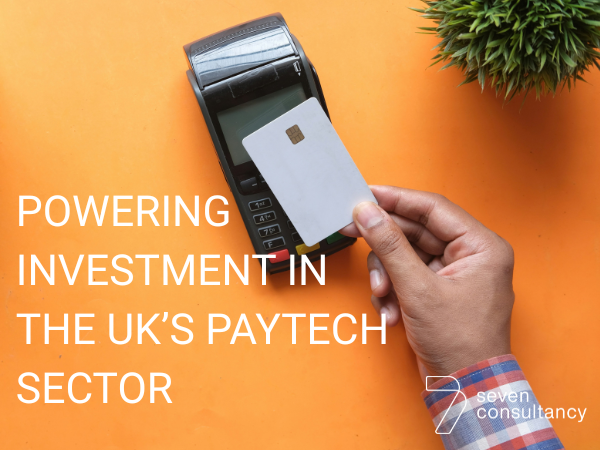
Robyn Margetts, Managing Director, discusses how paytechs can be a powerful driver of UK economic growth, and ways to unlock their full potential.
The UK is seeking economic growth and both the broader fintech sector, and paytechs in particular, can help to deliver that growth, acting as a powerful engine for investment, innovation and jobs.
Chancellor John Healey recently spoke about making “Great Britain, Growth Britain again”, calling for more innovation and pledging to double the number of unicorn firms within our shores. In order to support the adoption of emerging technologies, Healey announced his aim of implementing new sandboxing powers from next year to help firms safely test frontier technologies.
We were invited to a roundtable, taking place the day after the Chancellor’s speech, to discuss how industry players and policymakers can now come together to accelerate investment in the UK’s paytech sector.
The high-level session was hosted by the Office of the Small Business Commissioner, in partnership with Fintech Week London, and explored how driving investment into paytech can improve corporate payment practices, tackle late payments and deliver better outcomes for small businesses across the UK.
Incentivising investment in the next wave of innovators
Chaired by the Small Business Commissioner, Emma Jones CBE, the discussion focused on how we can better incentivise venture capitalists (VCs), who were well represented in the room, to invest in paytechs.
One interesting idea raised was whether VCs should now be considering payments as a core criteria when assessing potential investments. If a business has good payments processes and technology in place, then they are more likely to have a healthy cash flow and represent a stable investment for VCs.
Much of the conversation covered how VCs are now searching for more sustainable growth, rather than the rapid growth they wanted back in 2020. This is good news for paytechs as the sector is transitioning into a more mature phase, supported by higher volumes, more disciplined growth and improved infrastructure – creating a “steady burn” that VCs can tap into.
There were two founders in the room – from Saible, which is a specialist in construction finance infrastructure, and Adfin, a paytech that provides an accounts receivable and automated revenue collection platform. It was inspiring to hear them talk about their journeys and their ambition.
Participants also considered the success of open banking in the UK, and the lessons that can now be applied to the paytech sector. Following its official launch in January 2018, open banking has grown in stature and reach, and there are now more than 16.5 million active user connections across the country.
There was so much fintech innovation in the early days of open banking, especially through the disruptive Covid years. But how can we replicate this for paytechs?
This is where the power of sandboxes comes into play, as referenced by the Chancellor. We’ve seen this first-hand through the Open Up Challenges that we worked on with Challenge Works (part of innovation foundation, Nesta).
The first edition was mandated by the Competition and Markets Authority (CMA). It was launched in February 2017, so before open banking had even officially started. It saw fintechs drawing on open banking technology to develop innovative financial tools and apps to support small businesses, all conceived within a sandbox environment.
It was a huge success and prompted the Open Banking Implementation Entity (OBIE) to request a consumer-focused edition two years later, which resulted in a host of new solutions to foster financial wellbeing.
Sandboxes will play a crucial role in helping to keep the UK’s paytechs at the forefront of innovation.
Building on the sandboxes
The session also covered the wider role of regulators, who of course are crucial in establishing and overseeing sandbox environments. How can they help start-ups move from controlled testing to wider adoption?
It’s fair to say that some VCs would prefer lighter touch regulation so fledgling businesses can scale faster without red tape. But there is also a strong case – particularly in paytech – for having proportionate regulation in place to give investors more confidence that these businesses will operate within responsible guardrails and won’t go bankrupt.
There is a need for supportive, anticipatory regulation that gives paytechs the room to breathe without putting their users at risk. It’s therefore encouraging the government is tasking the Bank of England with a new “secondary objective” to better support payments innovation as digital technology continues to transform the way people and businesses make payments.
Sitting under its primary objective of fiscal stability, the new objective seeks to ensure that regulatory frameworks will create the right conditions for new solutions to develop safely and drive growth.
Leaving the roundtable, what struck me most was how in agreement many of the speakers were – no matter which viewpoint they were bringing. The founders, investors, policymakers and industry leaders around the table all recognised the opportunity for paytechs as part of the wider fintech ecosystem. The UK clearly has the talent, infrastructure and entrepreneurial spirit to lead the next chapter of payments innovation, but realising that opportunity will require collaboration, investment and a regulatory environment that gives businesses the confidence to innovate.
Having spent many years working alongside fintechs and paytechs, including through the Open Up Challenges, I’ve seen first-hand the impact that the right support – like sandboxes – can have in turning ambitious ideas into scaling businesses. I hope that we’ll continue to see the government, industry and regulators supporting founders in this space, and enable them to contribute to economic growth.
Share This Story
Latest From Seven
Powering investment in the UK’s paytech sector
Robyn Margetts, Managing Director, discusses how paytechs can be a powerful driver of UK ...

Behind The Sunday Times’ Best Places to Work 2026 Award
Earlier this year, Seven Consultancy won a place on The Sunday Times’ Best Places to Work 2026, within the ...
We’re hiring: Junior Account Executive, permanent position
Seven is a small communications and marketing consultancy based in London, recently named in the ...